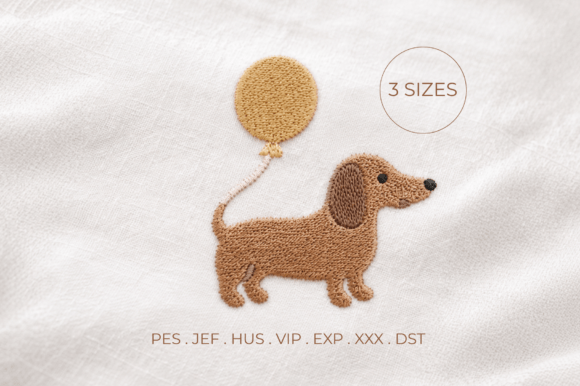
Review: Dachshund with Balloon Embroidery Design
As an embroidery designer who has spent years digitizing files for small businesses and boutique brands, I approach every new machine embroidery design with a critical eye. It is not just about whether the image looks cute on a screen; it is about how that design translates to fabric, how it holds up in production, and ultimately, how it serves the brand identity of the client using it. Recently, I evaluated the Dachshund with Balloon Embroidery Design, a file marketed toward baby clothes, nursery décor, and personalized gifts. While its primary description leans into the juvenile and playful, I wanted to determine if this asset has the versatility required for broader commercial embroidery projects, including branded patches, staff uniforms, and retail merchandise.
First Impressions: Visual Personality and Market Fit
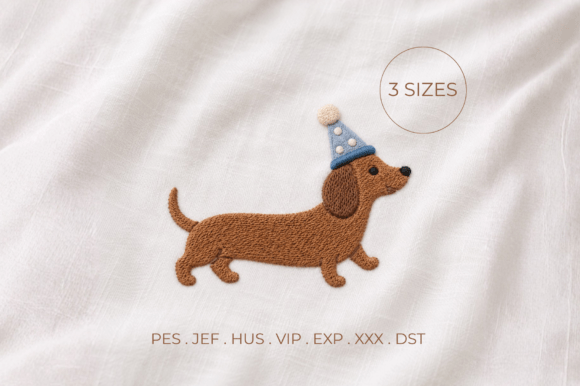
The immediate visual impact of the Dachshund with Balloon Embroidery Design is undeniably friendly and whimsical. In the world of Dogs themed artwork, dachshunds have a unique appeal due to their distinctive silhouette, which often translates well into simplified graphic forms. This particular design captures that charm with a balloon element that adds vertical interest and a sense of lightness. For a handmade product seller or an Etsy creator, this aesthetic signals warmth, approachability, and creativity. It does not feel corporate or rigid; rather, it feels decorative and personal.
However, for business owners looking to integrate this into a more serious brand identity, the playful nature requires strategic placement. It is not a minimalist logo, nor is it a bold, industrial mark. It is a character-driven illustration. This distinction is crucial when considering where to place it on custom apparel or promotional items. The design works best when the brand voice is community-focused, family-oriented, or centered around care and comfort, such as in pet grooming salons, children’s boutiques, or local bakeries aiming for a cozy vibe.
Commercial Applications Beyond Baby Gear
While the product description highlights baby clothes and bibs, limiting this digital embroidery file to infant wear would be a missed opportunity for savvy merch creators. I see significant potential for this design in the realm of small business merch. Imagine a local pet supply store using this as a chest accent on staff polo shirts. The balloon element provides a pop of color that can align with seasonal promotions or brand colors, making the uniform feel less sterile and more engaging.
For tote bag design applications, this motif shines. A canvas tote featuring this embroidered dachshund becomes an instant conversation starter. It transforms a generic bag into a piece of wearable art that customers are proud to carry. Similarly, for apron embroidery in cafes or florist shops, this design adds a touch of personality without overwhelming the garment. It suggests that the business values charm and attention to detail, which can enhance customer trust and perceived value.
Another viable avenue is the creation of embroidered patches. Patches are a trending component of modern branding, allowing businesses to update hats or jackets seasonally. If the Dachshund with Balloon Embroidery Design is scaled correctly, it could serve as a collectible item for loyal customers or a fun add-on for event merch. This flexibility makes it a valuable addition to a designer’s library of design assets.
Technical Considerations for Production Quality
From a technical standpoint, using any embroidery file for commercial purposes requires rigorous testing. The success of the finished product depends heavily on stitch density, thread colors, and fabric texture. Since the specific stitch count and hoop size are not detailed in the brief description, I advise all users to check those details before production. A design that is too dense may cause puckering on lightweight fabrics like baby onesies, while a design with too few stitches might look sparse on heavy denim or canvas tote bags.
When planning cap embroidery, one must be cautious. Curved surfaces distort designs, and small details can get lost. If this design includes fine lines in the balloon string or the dog’s facial features, it may need simplification or resizing to ensure clarity on a baseball cap front. Always test the design on the actual fabric you intend to use. For dark uniforms, consider how the thread colors contrast. A pastel balloon might disappear on a navy blue shirt unless you adjust the palette or add an underlay stitch for brightness.
Stabilizer choice is equally critical. For stretchy fabrics used in baby clothes, a cut-away stabilizer is often necessary to maintain shape after washing. For woven fabrics like aprons or tote bags, a tear-away might suffice, but testing is key. Never assume a digital embroidery file will perform identically across different materials. Create a printable mockup first to visualize scale, then move to physical samples.
Enhancing Brand Identity and Customer Engagement
Incorporating a character-based design like this into your product line can significantly boost buyer engagement. Customers connect emotionally with animals, and dachshunds have a dedicated following. By using this design on high-quality items, you signal that your brand is attentive and creative. It adds a layer of handmade product authenticity that mass-produced goods lack.
However, consistency is vital. If your brand identity is sleek and modern, this playful design might clash unless used sparingly as a surprise element. Ensure that the thread colors match your existing brand palette. If your logo uses specific shades of blue and yellow, try to match the balloon and dog tones to those hues. This visual consistency reinforces brand recognition and professionalism.
Practical Designer Notes for Implementation
Before committing to a large run of custom apparel or branded patches, follow these steps to ensure quality:
- Test in Monochrome: Stitch out the design in black and white first. This helps you evaluate the structure and spacing without the distraction of color. If it looks messy in one color, it will look messy in many.
- Check Small Patch Sizes: Scale the design down to the smallest size you intend to use. Verify that the details remain distinct and do not merge into a blob of thread.
- Review Thread Color Contrast: Ensure there is enough contrast between the dachshund, the balloon, and the background fabric. Low contrast can make the design look muddy from a distance.
- Confirm Hoop Size Compatibility: Make sure the design fits within your machine’s hoop capabilities without requiring excessive re-hooping, which can lead to misalignment.
- Verify Commercial Licensing: Always confirm the license terms of the digital embroidery file. Ensure you have the right to use it for commercial embroidery projects and resale items.
In conclusion, the Dachshund with Balloon Embroidery Design is a versatile asset that extends far beyond nursery décor. With careful technical execution and strategic placement, it can elevate small business merch, enhance staff uniforms, and create memorable customer gifts. By treating it as a professional design element rather than just a cute clipart, embroidery shops and brand owners can unlock its full potential in the competitive market of custom apparel and handmade goods.